How to Fix a Stalled Pear Cider Fermentation from Sorbate
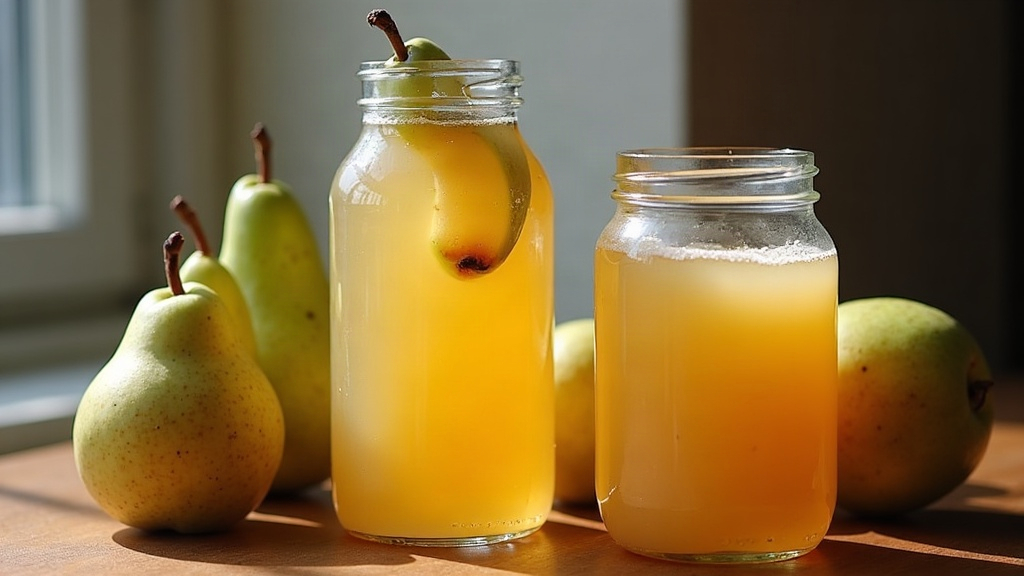
If your perry’s fermentation has ground to a halt and you’ve just found out the juice was treated with potassium sorbate, brace yourself. This is one of the more annoying stuck fermentations to untangle. Sorbate doesn’t actually kill your yeast. Instead, it stops the cells from reproducing, so as your existing population naturally dies off, nothing’s there to replace them. Fixing it isn’t about re-pitching the way you’d normally handle a stall. You need to flood the batch with a huge, tough yeast population that can simply out-muscle the sorbate’s effect.
Why Sorbate Stalls Fermentation
Potassium sorbate shows up in commercial juice as a preservative, meant to keep it from spoiling or fermenting on the shelf. Here’s what it actually does:
- It blocks cell division. The yeast you pitched can still chew through sugar for a while, but it can’t multiply to keep the population healthy.
- It sticks around for a long time. Sorbate doesn’t break down fast. Juice you bought a month ago could easily still have active levels in it.
- It creates what I’d call a “zombie” fermentation. Things look fine at first, bubbling away like any normal batch. But as cells die off one by one with nothing replacing them, activity slows, then stops, usually somewhere in the middle of the process rather than at the end.
This is a fundamentally different problem than a nutrient deficiency or a cold-shocked must, which explains why the usual tricks (adding nutrients, stirring, bumping the temperature) rarely do much on their own.
How to Confirm Sorbate Is the Cause
Don’t jump straight to treatment until you’ve ruled out the obvious stuff:
- Go back and check the label or ask the supplier. “Potassium sorbate” or “sorbic acid” will usually be listed right there as a preservative.
- Take a gravity reading. If the number hasn’t budged in 5-7 days and sits well above your target final gravity, with temperature and nutrients both looking fine, sorbate is a strong suspect.
- Give it a sniff. Sorbate-affected musts sometimes pick up a faint geranium-like smell when bacteria interact with the compound. Not pleasant, but a useful clue.
Step-by-Step Fix
1. Pitch an Overwhelming Amount of Yeast
This is the core of the fix: an aggressive overpitch, 3 to 5 times your normal rate, using a strain known to shrug off sorbate.
- Rehydrate a fresh packet of EC-1118 (or another neutral wine yeast with high alcohol tolerance).
- Build a starter 24-48 hours ahead of time, using some of the stalled cider plus fresh juice and nutrient. The goal is to let the yeast population explode before it ever meets the sorbate.
- Once that starter is roaring, pitch it straight into the stalled batch.
2. Dilute the Sorbate Concentration
Where you can, cut in 10-20% fresh, sorbate-free juice (or even water). This won’t eliminate the sorbate, but it thins it out enough to give the new yeast a bit of breathing room before they hit the inhibited environment.
3. Boost Yeast Health with Nutrients
Add a complete nutrient blend (diammonium phosphate plus yeast hulls) right at pitching time. Yeast that’s well-fed and healthy simply holds up better against sorbate’s reproduction block.
4. Raise Temperature Slightly
Push the must up toward the higher end of your strain’s comfort zone, roughly 68-72°F (20-22°C). A faster, more vigorous fermentation gives the yeast a better shot at outpacing die-off.
5. Monitor Closely
Take gravity readings every 1-2 days. If things kick off and then stall again at roughly the same point, don’t panic, just repeat the overpitch. Sometimes sorbate needs more than one round of aggressive intervention before it finally gives up.
When to Cut Your Losses
Two solid overpitch attempts with full nutrient support and still nothing? Time to consider other options:
- Blend it into a fully fermented batch to even out the sweetness and alcohol.
- Call it a semi-sweet finished cider, assuming the flavor’s decent, and stabilize it properly rather than keep fighting an uphill battle.
Preventing This Next Time
- Ask suppliers point-blank whether their juice is preservative-free before you buy anything for fermenting.
- Look for juice labeled “fresh-pressed, no preservatives” or “not from concentrate, unpasteurized.”
- If sorbate-treated juice is genuinely your only option, plan for an aggressive starter from day one instead of a standard pitch.
Conclusion
A sorbate-stalled perry isn’t a lost cause, but it does demand a different playbook than your typical stuck fermentation. The trick is overwhelming that reproduction block with a big, pre-built yeast starter, backed up by solid nutrition and a touch more warmth. Give it patience and the right approach, and most of these batches can still be coaxed across the finish line into a cider worth drinking.