Water Chemistry for a Crisp Czech-Style Dark Lager
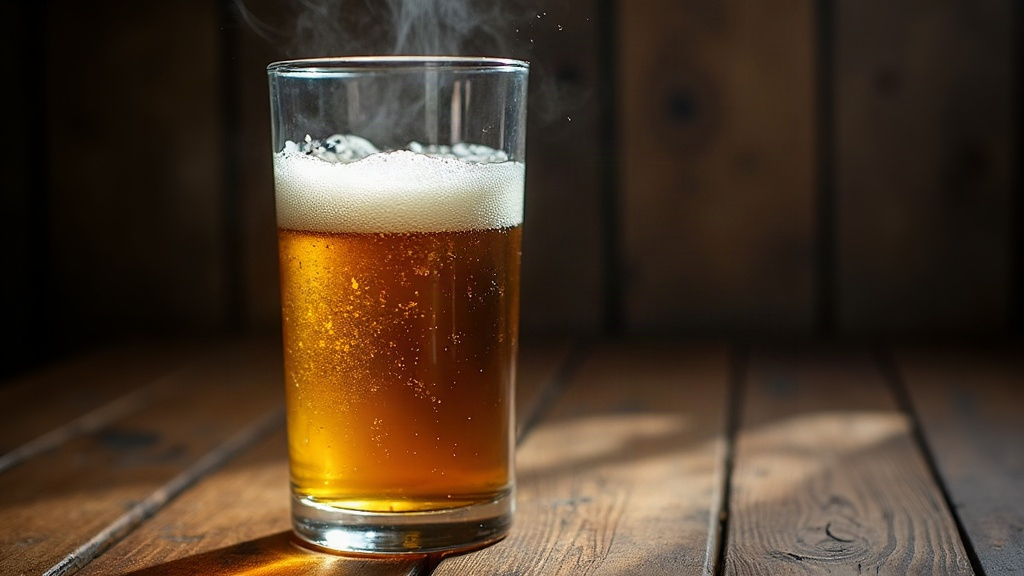
A good water plan for a Czech-style dark lager puts the malt front and center without making the beer heavy, dull, or overly sweet. What you’re aiming for is a deep brown to nearly black lager in the glass: soft mouthfeel, clean fermentation, restrained bitterness, and a dry, crisp finish. Getting there almost always means starting with soft to moderately mineralized water, keeping residual alkalinity under control, and handling the dark malts with a bit of care.
Why water matters so much in Czech dark lager
A Czech-style dark lager, often modeled on tmavé pivo, lives or dies by its balance. Roasted malt should smell like bread crust, cocoa, or freshly ground coffee, never sharp, burnt, or astringent. The body, meanwhile, shouldn’t tip over into porter territory. It’s still a lager at heart: clean, drinkable, precisely built.
Water chemistry pulls on several of these threads at once:
- Mash pH: governs enzyme activity, fermentability, and how the malt profile ultimately tastes.
- Residual alkalinity: buffers the acidity of dark malts and keeps mash pH from dropping too low.
- Chloride: adds fullness and a rounder malt perception.
- Sulfate: sharpens dryness and hop bitterness, but should be used sparingly here.
- Calcium: plays a role in the mash, hot break, yeast health, and clarity.
- Sodium: in small amounts rounds out maltiness, but tastes salty or harsh in excess.
Target values for your brewing water
There’s no single, historically verified water analysis that fits every Czech dark lager. For home brewers, exactly replicating a well in Pilsen or Budweis matters far less than building a reproducible, balanced profile that tastes the same week after week.
For most recipes built around Munich malt, Vienna malt, and a small percentage of roasted malt, this target range works reliably:
| Ion | Target range in mg/l (ppm) | Effect |
|---|---|---|
| Calcium (Ca) | 40–60 | Mash, yeast health, clarity |
| Magnesium (Mg) | 5–10 | Yeast nutrient, slight bitter edge |
| Sodium (Na) | 10–25 | Rounds out malt character |
| Chloride (Cl) | 50–80 | Softer, maltier impression |
| Sulfate (SO₄) | 25–50 | Light dryness, cleaner bitterness |
| Bicarbonate (HCO₃) | 80–150 | Buffer for dark malts |
A chloride-to-sulfate ratio of roughly 2:1 is a solid starting point. That doesn’t mean chloride needs to be extremely high — quite the opposite. It’s there simply to carry that malty roundness further than a dry, hop-forward sulfate profile ever could.
Getting the mash pH right
For a crisp Czech-style dark lager, the practical target is a mash pH of 5.35 to 5.45, measured at room temperature. For dark lagers, this can sit a bit higher than it would for a very pale pilsner, since too low a pH quickly makes roast notes turn sharp and thin.
What happens when the pH is off?
If mash pH drops below about 5.25, you risk several problems at once:
- a harsh, dry roastiness;
- a thinner body than the recipe should deliver;
- an overemphasized, intrusive bitterness;
- a malt sweetness that no longer feels rounded.
If the value climbs well above 5.50, on the other hand, the beer can taste flat, rough, or less clean. Wort boiling and the resulting bitterness perception also become harder to predict.
Honestly, a calibrated pH meter matters more for this style than any spreadsheet. Water calculators are a decent starting point, but malt batches — roasted malts especially — vary noticeably from bag to bag.
Using dark malts deliberately
Dark malts naturally lower pH. With very soft, nearly carbonate-free water, a classic grain bill can push mash pH down too far. The obvious fix — just adding more baking soda — is rarely the most elegant solution. Often, a malt-handling technique will solve the problem before you ever need to reach for the chemical jar.
Late addition of roasted malt
Add Carafa Special, roasted barley, or chocolate malt only during the last 10 to 15 minutes of the mash. You still get the color and aroma, without acidifying the mash for its full duration.
This technique works especially well if you’re brewing with soft source water or RO water. In practice, it often delivers a clean dark-malt profile without the ashy, dusty note that makes some dark lagers feel unnecessarily heavy.
Cold steeping as an alternative
For very dark recipes, cold steeping is worth considering: steep crushed roasted malt in cold water for 12 to 24 hours, then add the filtered extract to the wort near the end of the boil. The result is color and gentle cocoa notes with noticeably less bitterness and acidity than a standard mash addition would bring.
A practical water profile built from RO water
Starting from RO water or very soft source water makes it simple — and more importantly, repeatable — to hit your target profile. For 20 liters (about 5 gallons) of brewing water, a good starting point is roughly:
- 1.5 g calcium chloride;
- 0.8 g calcium sulfate (gypsum);
- 0.5 g Epsom salt (magnesium sulfate);
- 0.5 to 1.0 g baking soda, only if needed.
The exact amounts depend on your grain bill, the specific salt forms you’re using, and your target volume — there’s no universal number here. Never add baking soda as a matter of course: check your calculated, and ideally measured, mash pH first. With a moderately dark grain bill, the natural bicarbonate already in your tap water is often enough on its own, with no addition needed.
Use food-grade brewing salts and dissolve them thoroughly before adding them. Split the additions sensibly: the bulk should go into the mash water, with smaller corrections reserved for the sparge water later on.
Reading your tap water correctly
Request the current water report from your utility — many make it available online. Calcium and bicarbonate matter, but so do chloride, sulfate, and sodium; don’t focus on just the headline numbers. One thing that’s easy to overlook: these values shift with the seasons, sometimes more than you’d expect.
If your tap water is chlorinated, remove chlorine and chloramine before brewing. An activated carbon filter is the most reliable way to do this. Alternatively, a very small dose of potassium or sodium metabisulfite works well. Even trace chloramine can react with malt phenols and produce unpleasant medicinal or plastic-like off-flavors — a risk that’s easy to avoid with minimal effort.
Common mistakes to avoid
Too much sulfate
A heavily sulfate-forward profile suits hop-driven, dry beers, but it rarely works for a Czech dark lager. The bitterness turns sharp and edgy faster, competing unnecessarily with the bread, caramel, and cocoa notes that should be front and center.
Too much bicarbonate
Dark beer doesn’t automatically require “hard water” — that’s a common misconception. Too much bicarbonate pushes mash pH too high and creates a dull, almost chalky roastiness. Work from a clearly measurable target range instead of going by feel.
Too much roasted malt and too much salt
Water chemistry can’t rescue an overbuilt recipe, no matter how much math you throw at it. Keep very dark malts to roughly 3 to 8 percent of the grain bill, depending on the variety and the color you’re after. The same rule applies to salt additions: less is usually more.
Conclusion
A crisp Czech-style dark lager doesn’t need an extreme water profile — it needs controlled balance: moderate calcium, more chloride than sulfate, enough buffering capacity for the dark malts, and a mash pH around 5.4. Measure, log your results, and change only one variable at a time, and a good dark lager turns into a clear, dry, and surprisingly elegant beer.