Fermenting Winter Squash Kvass with Roasted Seeds Drink
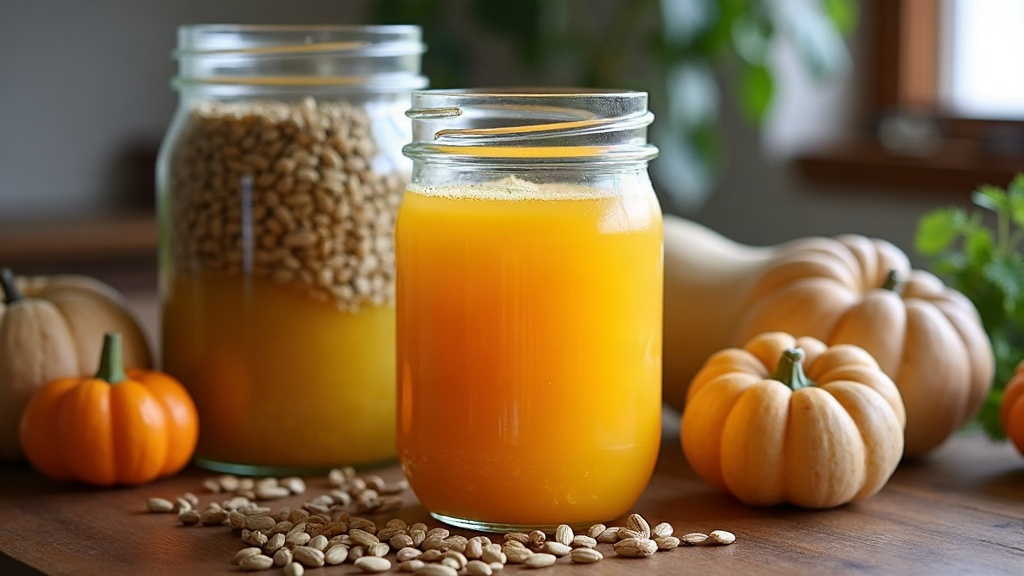
Winter squash kvass is that tangy, savory, faintly fizzy drink you get from fermenting roasted (or raw) squash with water, salt, and patience. Roast the seeds you scoop out alongside it, and suddenly you’ve turned what usually ends up in the compost into a crunchy, salty snack. One squash, two foods: a gut-friendly beverage and a nutrient-packed topping, with almost nothing left to throw away.
What Is Squash Kvass, Exactly?
Traditional kvass comes from Slavic kitchens, usually brewed from stale rye bread. Vegetable kvass borrows the same lacto-fermentation trick but trades bread for roots or squash, letting wild lactic acid bacteria (or a splash of whey or starter culture) convert sugars into something tangy and alive. Squash kvass brings:
- A deep, earthy-sweet base from roasted squash
- A pleasant sourness from fermentation
- Light, natural carbonation
- A savory finish that plays well with herbs, garlic, or ginger
Think of it less as a soda and more as a fermented vegetable tonic, a cousin to beet kvass, but richer and more suited to cold weather.
Why Use Winter Squash?
Butternut, kabocha, delicata, or sugar pumpkin all work because they check the right boxes:
- High in natural sugars. That feeds the fermentation without needing added sweeteners.
- Dense and starchy. Gives the kvass body and a silky mouthfeel instead of a watery one.
- Abundant in fall and winter. Often cheap, sometimes free if you grow your own.
- Loaded with seeds. Which is exactly what makes the zero-waste roasting step possible.
Ingredients You’ll Need
- 1 medium winter squash (about 2-3 lbs), seeds set aside
- 2 liters filtered, non-chlorinated water
- 2-3 tablespoons sea salt (unrefined, no iodine)
- Optional starter: ¼ cup whey, sauerkraut brine, or a splash from a previous ferment
- Aromatics: 3-4 garlic cloves, a thumb of fresh ginger, a few peppercorns, or a sprig of rosemary
Step-by-Step Fermentation Method
1. Prep the Squash
Halve the squash, scoop out the seeds, and set them aside for later. Roast the flesh at 400°F (200°C) for 35-40 minutes, until it’s caramelized at the edges but not falling apart. Roasting first does more for flavor than raw fermentation ever could on its own.
2. Cube and Jar
Let it cool, then cube the roasted squash and pack it loosely into a clean fermentation jar, filling it about two-thirds of the way. Tuck in the garlic, ginger, or herbs now.
3. Make the Brine
Dissolve the salt into the water until you hit roughly 2-3% salinity. If you’re using a starter culture, stir it in only after the brine has cooled to room temperature, hot brine will kill the cultures you’re trying to add.
4. Ferment
Pour the brine over the squash, leaving about an inch of headspace at the top. Weigh the solids down so nothing floats above the liquid, cover loosely (an airlock lid is ideal here), and let it sit at room temperature, 65-75°F, for 5 to 10 days. Start tasting daily once you hit day 4.
5. Strain and Bottle
When the flavor hits that sweet spot, tangy, a little fizzy, savory, strain out the solids and move the liquid into bottles. Refrigerate from there. It’ll keep for 3-4 weeks chilled.
The Zero-Waste Step: Roasted Squash Seeds
While the kvass does its thing in the corner of your kitchen, don’t let those seeds go in the trash:
- Rinse off the pulp and pat them dry.
- Toss with a teaspoon of oil, some salt, and maybe a pinch of smoked paprika or cumin if you want extra depth.
- Spread on a baking sheet and roast at 325°F (160°C) for 15-20 minutes, stirring once halfway through.
What comes out is crunchy, savory, and genuinely addictive, good sprinkled straight into a glass of kvass or eaten by the handful on its own.
Troubleshooting Common Issues
- No bubbles after a week: Your kitchen is probably too cold. Move the jar somewhere warmer, around 70-75°F, and give it a few more days.
- Mold on top: Nearly always comes from solids poking above the brine line. Keep everything fully submerged, every time.
- Too salty: Just dilute the finished kvass with a bit of filtered water before serving.
- Flat, boring flavor: Use a stronger starter culture next time, or just let it ferment 1-2 days longer.
Serving Ideas
- Chilled over ice with a lime wedge
- As a tangy base for savory cocktails or mocktails
- Stirred into soup stock for extra depth (and a probiotic boost)
- With roasted seeds scattered on top for crunch
Conclusion
Fermenting winter squash kvass turns one squash into two genuinely satisfying things: a tangy, probiotic drink and a crunchy, savory seed snack. It costs almost nothing, follows the season naturally, and wastes basically zero of the vegetable, only the skin goes unused. Try it once with butternut or kabocha, and you’ll probably start wondering what other winter vegetables deserve the same treatment.