Sparkling Persimmon Tepache: A Wild-Fermented Autumn Drink
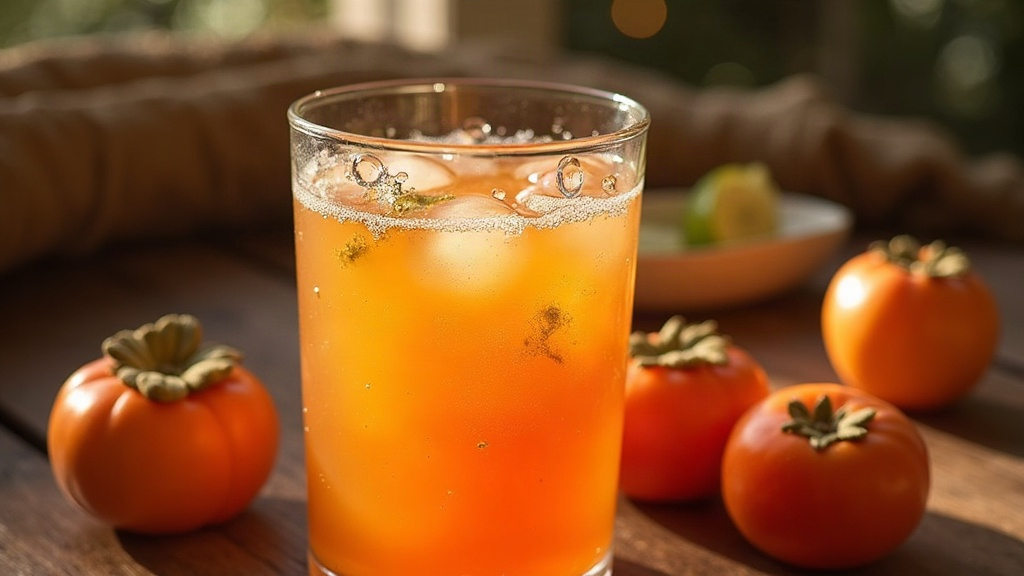
Persimmon tepache is a naturally carbonated, low-alcohol autumn drink you make by letting ripe persimmons ferment with sugar and water. It leans entirely on the wild yeasts and bacteria already sitting on the fruit’s skin, so there’s no commercial yeast, no starter culture, no forced carbonation. Just time, the right temperature, and a bit of patience on your part. What you end up with is honeyed, faintly tangy, gently fizzy, the kind of drink that tastes like the season itself.
What Is Tepache, and Why Persimmons?
Tepache is a traditional Mexican fermented drink, usually built from pineapple peels and cores. But the core technique (fermenting fruit scraps or whole fruit in sugar water at room temperature) transfers well to other fruits. Persimmons happen to work great in autumn, and here’s why:
- Their natural sugar content is high, so wild microbes have plenty to feast on.
- The skins carry a lot of wild yeast, not unlike grapes or apples.
- The soft, almost custardy flesh breaks down fast and releases flavor quickly.
- The finished drink picks up notes of honey, dried apricot, and a whisper of spice, unmistakably autumnal.
Stick to fully ripe, even slightly overripe Fuyu or Hachiya persimmons. Underripe fruit, especially astringent Hachiya varieties, will taste chalky and tannic no matter how long you ferment it.
Why No Added Yeast?
Skipping packet yeast is what keeps this a genuine wild fermentation, the same principle behind kombucha, sourdough, or old-school cider making. Unwashed, organic (or at least unscrubbed) persimmon skins already carry a whole community of wild yeasts and lactic acid bacteria. Sure, adding commercial yeast would speed things along and push up the alcohol content. But it flattens the flavor, and you’d end up with something closer to a quick alcoholic cider than a lightly sparkling, food-safe tepache.
Basic Persimmon Tepache Recipe
Ingredients:
- 3-4 ripe persimmons, roughly chopped (skins on, unwashed if organic)
- 1 liter (about 4 cups) non-chlorinated water
- 1/2 cup unrefined cane sugar or piloncillo (skip the overly processed white sugar if you can)
- 1 cinnamon stick
- 2-3 whole cloves (optional)
- A small piece of fresh ginger, sliced
Method:
- Dissolve the sugar in warm water, then let it cool to room temperature.
- Drop the chopped persimmons, cinnamon, cloves, and ginger into a clean glass jar.
- Pour the sugar water over the fruit, leaving about 2 inches of headspace.
- Cover with a breathable cloth or coffee filter, secured with a rubber band. No airtight lid at this stage, ever.
- Let it sit at room temperature (68-75°F / 20-24°C) for 24-48 hours, stirring once a day. This keeps mold at bay and feeds the yeasts a bit of fresh oxygen.
Recognizing Fermentation Activity
You’re watching for small, encouraging signs here, not some dramatic bubbling show:
- Tiny bubbles clinging to the fruit, or rising when you stir
- A faint sour-sweet smell, a little winey almost
- A light foam or fizz forming on the surface
If you spot fuzzy mold (not the harmless white kahm yeast film, which you can just skim off), toss the batch and start fresh with cleaner equipment. No point risking it.
Bottling for Natural Carbonation
Once bubbling activity kicks in, usually around day 2 or 3:
- Strain out the solids with a fine mesh strainer.
- Move the liquid into a flip-top bottle or a jar with a tight lid, leaving room for gas to build.
- Let it sit at room temperature for 12-24 hours so carbonation develops.
- Burp the bottle daily, just crack it open for a second. This stops pressure from building up and cracking your bottle.
- Once it’s lightly sparkling, refrigerate to slow things down and drink within 5-7 days.
Troubleshooting Common Issues
- No bubbles after 3 days: the room’s too cold. Move it somewhere warmer (but don’t go above 78°F/25°C).
- Too sour, too fast: bacteria are winning the race against the yeast. Cut the fermentation time shorter next round.
- Tastes too alcoholic: you let it go too long before bottling. Pull it earlier next time.
Serving Ideas
Serve persimmon tepache well chilled, over ice, maybe with a twist of orange peel, or stir it into a mocktail with sparkling water. It also makes a solid base for a light autumn spritzer with a splash of apple cider vinegar thrown in.
Conclusion
Turning persimmons into a lightly sparkling tepache is about as low-effort as fermentation gets, and it’s a smart way to use up autumn’s fruit glut while making something fizzy and probiotic-rich in the process. No yeast packets, no fancy gear, just ripe fruit, sugar water, and a little patience. Once you get the timing and bottling down, it turns into one of those small seasonal rituals you’ll want to repeat every fall.