Beginner's Guide to Small-Batch Whey-Free Carrot Kvass
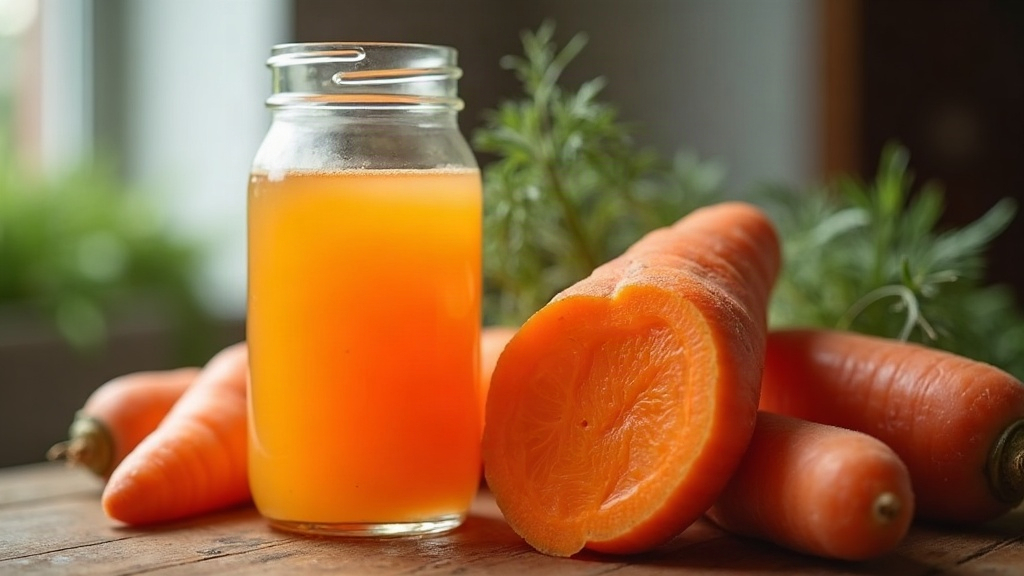
Carrot Kvass Without Whey: A Small-Batch Guide
Carrot kvass is that tangy, mineral-rich tonic you get by dunking shredded or chopped carrots in salt brine and letting wild lactic acid bacteria go to work. No lab equipment, no fancy cultures. This guide walks you through a small batch, about one quart, using nothing but water, salt, and carrots. No whey, no dairy, no store-bought starter needed.
What Is Carrot Kvass, Exactly?
Traditionally, kvass comes from Eastern Europe and is usually made from stale bread. Carrot kvass just borrows the name. Swap grain for vegetables and you get a probiotic-rich, slightly sour, earthy-sweet drink that people knock back in small shots for gut support, much like beet kvass’s cousin.
Because it relies on wild fermentation (the bacteria already living on the carrots and floating around your kitchen), you skip the whey, kefir, or commercial starter entirely. Salt does the heavy lifting here: it creates an environment where beneficial lactobacillus can thrive while spoilage organisms get shut out.
Why Skip the Whey?
Older recipes love to call for whey, the liquid strained off yogurt, to “jump-start” things. Truth is, most vegetable ferments don’t need it at all:
- Salt alone controls the process. Get the ratio right and it suppresses harmful bacteria while favoring the lactic acid producers already sitting on your produce.
- It’s more reliable for vegans and dairy-free kitchens. No dairy byproduct to hunt down.
- It avoids inconsistent results. Whey can drag in stray yeasts or a dairy tang that buries the carrot’s natural sweetness.
- It’s just simpler. Fewer ingredients, fewer things that can go sideways.
What You’ll Need
- 3–4 medium organic carrots (about 1 pound), scrubbed, skin left on if you can
- 2 cups filtered or dechlorinated water
- 1 to 1.5 tablespoons of non-iodized salt (sea salt or kosher salt)
- A clean quart-sized glass jar
- A fermentation weight, or just a smaller glass jar filled with water to hold the carrots down
- A cloth or coffee filter with a rubber band, or an airlock lid
Step-by-Step Instructions
1. Make the Brine
Dissolve the salt completely into the water. You’re aiming for roughly a 2-3% salinity, strong enough to keep mold at bay but not so heavy it stalls the ferment. For a quart jar, 1.5 tablespoons of salt to 2 cups water is a good starting point.
2. Prepare the Carrots
Cut carrots into rounds, matchsticks, or just grate them coarsely. Smaller pieces ferment quicker; chunkier ones hold onto more crunch. If they’re organic, don’t bother peeling. There’s beneficial bacteria living right on that skin.
3. Pack the Jar
Fill the jar about three-quarters with carrots, leaving 1-2 inches of headspace at the top. Pour brine over until everything’s fully submerged.
4. Weigh It Down
Use a fermentation weight, or that smaller water-filled jar trick, to keep the carrots under the brine line. Anything poking above the surface is an invitation for mold.
5. Cover and Ferment
Cover with a breathable cloth or an airlock lid. Set the jar somewhere out of direct sunlight, ideally between 65-75°F (18-24°C). A kitchen counter away from the stove usually works fine.
6. Wait and Taste
Start sampling around day 3. Most batches need 5-10 days to hit that pleasant sour, slightly fizzy tang, depending on how warm your kitchen runs. Hot summer kitchen? Could be done in 5. Chilly basement? Give it closer to 10.
Signs of a Successful Ferment
- Bubbles rising when you give the jar a tap
- A brine that smells tangy, a bit yeasty, and pleasant, not putrid
- Cloudy, slightly thickened liquid
- Carrots that have softened without turning to mush
Troubleshooting Common Issues
- White film on top (kahm yeast): Harmless. Just skim it off and carry on, the batch isn’t ruined.
- Fuzzy mold (blue, green, black, pink): Toss the whole thing and start fresh with a stronger brine.
- No bubbles after a week: Your kitchen’s probably too cold. Move the jar somewhere warmer and give it a few more days.
- Too salty or too bland: Note it for next time, and actually taste your brine before pouring it in.
Storing and Serving
Once it’s as sour as you like, strain out the liquid (or leave the carrots in, your call) and stick it in the fridge. It’ll keep 4-6 weeks chilled, mellowing out a bit more as time goes on. Drink it straight as a shot, whisk it into a salad dressing, or use it as a tangy base for soup.
Final Thoughts
Small-batch carrot kvass is proof you don’t need whey, dairy, or a boutique starter culture to get the benefits of fermented vegetables. Just carrots, salt, water, and a bit of patience. Start with a quart, keep an eye on your brine ratio and the room temperature, and within a week you’ll have something worth sipping. After that first batch, you’ll probably be itching to try beets, radishes, or a bigger jar next round.